
A Memory
It’s Christmas morning. I walk out of my bedroom, eyes half shut, and glance into the living room where the Christmas tree sits. My eyes settle on a wooden dollhouse wrapped in a giant red sparkly bow. My eyes widen; I can’t quite believe what I’m seeing. Trembling with excitement, I call to my mom to show her what Santa delivered.
When I was a child, we lived with my grandparents due to financial troubles. My mother worked full-time and I felt her absence keenly. I think she felt a little guilty about this and tried to make up for it during the holidays.
So, although this is a cherished memory it also represents an early pattern in connecting material things with feelings of happiness.
When Mind and Body Become Friends
In my young adulthood, I loved shopping for new clothes and was addicted to the short-term high a new “shiny” item provided. The accompanying “low” when the credit card bill arrived was another story. I wracked up a lot of debt.
When I finally discovered the practice of yoga in my twenties, it wasn’t because I thought I needed it but simply because I wanted to exercise.
I didn’t know then that this sacred and ancient practice, which facilitates the coming together of movement and breath, mind and body, would change my life, would help me unwind old patterns and habits.
As my body and mind became friends again, I became more aligned with my true needs and values, which had nothing to do with new clothes or misguided beauty procedures (I also had a habit of spontaneously cutting or dying my hair).
My desire to shop (or damage my hair) receded to the background as I became reacquainted with the beauty of the natural world, and less concerned with my image. I aligned with the intangible things that nourished my body and soul, such as connection, ease, and joy.
Pema Chödrön, an American Buddhist, reminds us that shopping is a way of “trying to find security” and “trying to feel good about yourself.” And since we can’t find our self-worth in material positions the cycle continues, and we’re never truly satisfied.
Abundance Is …
So, what is abundance really?
Recently, I walked into one of the preschools where I teach yoga classes. My throat was a little sore and I wasn’t feeling my best, but I tried not to show it as I greeted my young students.
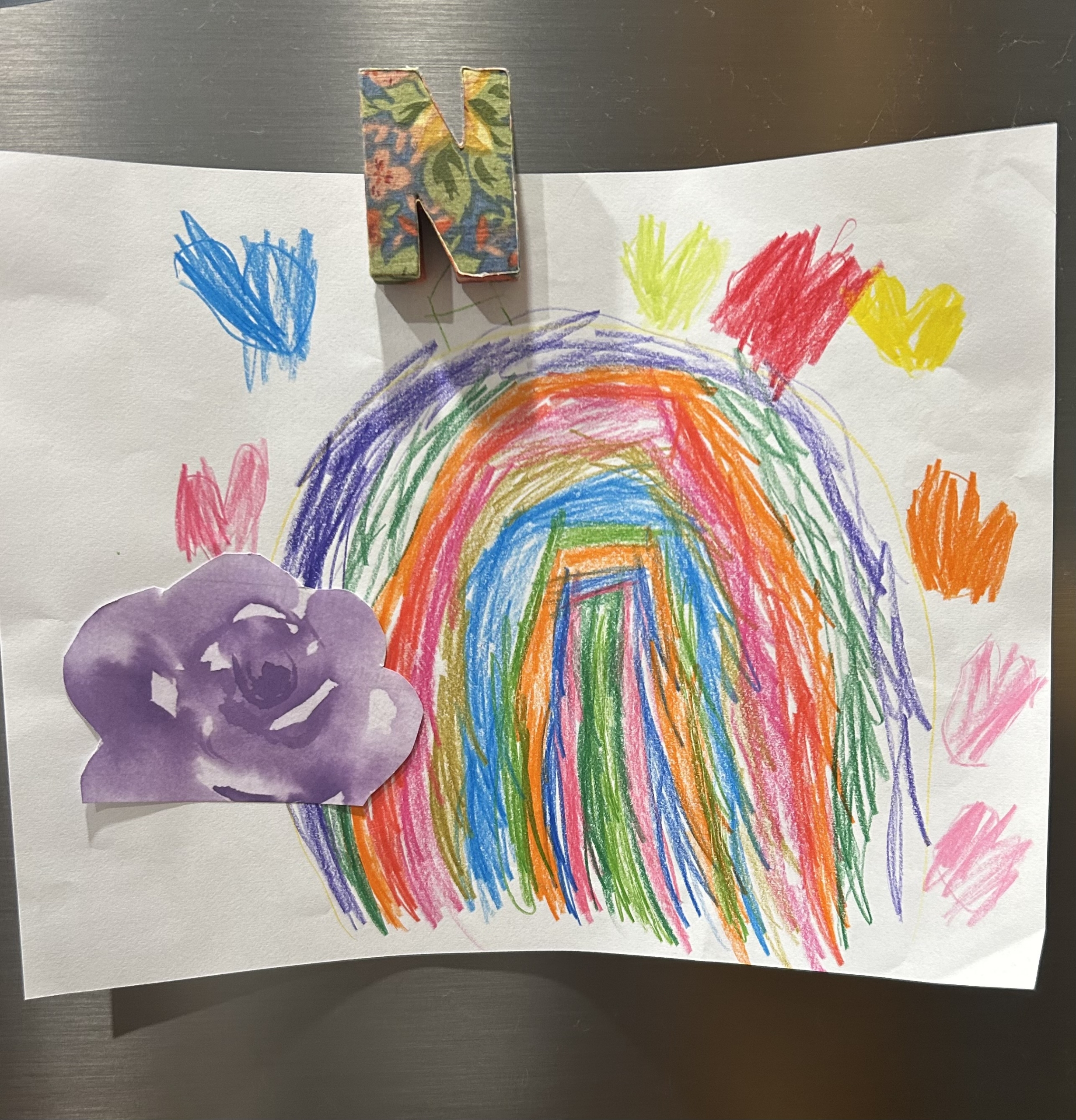
I set my yoga mat down and heard: “Ms. Nicole, I made this for you.” A little hand held out a picture of a colorful rainbow surrounded by hearts and a flower.
I forgot about my sore throat in that moment and. I felt like the most abundant person in the world.
I think of abundance as the type of satisfaction that lives in our heart long after the thing or experience is gone.
A Deeper Kind of Abundance
It goes without saying that having our basic needs met, feeling financially secure, and having access to resources that support our well-being is a priority and makes a profound difference in our lives.
And yet, having these things doesn’t always mean we feel content, fulfilled, or at peace.
We can acquire more and still feel that something is missing. We can reach a long awaited goal to discover that the satisfaction it brings is fleeting before our attention turns toward the next thing.
Just like the jolt of excitement I received as a child on Christmas morning, we can become addicted to the high something new brings and confuse that with abundance.
But if we can learn to feel abundance in smaller moments, such as a morning ritual, a handmade gift from a child, a “time out” to rest, a good meal, we start to build a foundation of inner and lasting abundance.
Pema Chödrön reminds us that we sometimes look outside ourselves for the security and happiness that is already within us. As we recognize this tendency and align with the strong foundation that already exists within us, we create room to discover a deeper kind of abundance.
The Stories We Tell Ourselves
The mind can get stuck in a pattern of noticing what’s missing. If only I had a better job, a bigger home, looked differently, or was further along in life.
There is nothing inherently wrong with wanting things to change, but we can appreciate what we have while working toward something different. The difficulty arises when we become so focused on what’s missing, or what we perceive as wrong, that we lose sight of anything good in the present.
One reason mindfulness can be such a valuable practice is it invites us to notice what’s happening in our thought patterns rather than automatically accepting every thought as the truth.
It can be helpful to become aware of a familiar story we tell ourselves or a theme of lack, not to judge it but to acknowledge our desire for something more and then widen our perspective to include what is already supporting us.
Gratitude Without Pretending
One way to begin feeling a sense of abundance is through gratitude.
And no, this doesn’t mean forcing ourselves to feel grateful for circumstances that are painful or difficult. It doesn’t mean minimizing our struggles or convincing ourselves that we shouldn’t want something better.
We can, for example, feel frustrated with an old car and still grateful that it gets us where we need to go. We can want a home of our own while appreciating the shelter we have today. We can be disappointed about a missed opportunity while remaining open to other possibilities.
Two things can be true at once. We can aim for something different while still appreciating what we have.
In her article How to Cultivate an Abundance Mindset, Ingrid Fetell Lee of Aesthetics of Joy makes an important distinction between genuine gratitude and what she calls toxic gratitude. Gratitude isn’t about shaming ourselves into feeling better or insisting that everything is fine. It’s about making room to notice what we genuinely value, even when life is imperfect.
We can start small.
The warmth of the morning sun. The feeling of soft sweatpants after a busy day. A child’s smile. The sound of a cat purring. A warm drink.
These moments don’t need to be extraordinary to be meaningful; we simply need to be present to experience them.
The more often we pause to appreciate what matters to us, the more opportunities we create to experience the richness of ordinary life.
A Practice for the Season of Harvest
This October, consider taking a few minutes to reflect on the abundance in your own life. You don’t necessarily need a journal. You can do this while walking outside, sitting on a park bench, or taking a few slow, purposeful breaths at the end of your day.
Begin by noticing your breath. Feel the ground beneath your feet or the support of the chair beneath you. Allow yourself to arrive in this moment, fully, without needing to change anything.
Then consider these questions:
- What is nourishing me right now? This might be a relationship, a daily ritual, a creative practice, time in nature, or a warm meal.
- What have I been overlooking? Is there a small kindness, a source of comfort, or an ordinary pleasure that I haven’t taken the time to appreciate?
- What would abundance look like if I defined it for myself? Set aside what the world tells you that you should want. What genuinely makes your life feel richer?
- What abundance can I share? Is there a way to offer kindness, encouragement, time, or attention to someone else?
Simply notice what arises, allowing yourself to be curious rather than critical.
And if this practice brings up sadness, longing, or an awareness of what you don’t have, let that be part of the experience, too. We don’t have to replace difficult feelings with positive ones. We can make room for both gratitude and grief, contentment and the desire for change.
The practice is not about convincing yourself that you have everything you need. It is about learning to see your life more fully.
Gathering What Is Here
As the days grow shorter and the leaves begin to fall, the season invites us to take stock.
We cannot hold on to every beautiful moment, just as we cannot ask the trees to keep their leaves forever. Life changes, circumstances shift, some things arrive and others leave.
Maybe part of experiencing abundance is learning to appreciate what is here without needing to hold on to it or make it permanent.
We can work toward a more secure future while finding moments of peace in the present. We can acknowledge what is difficult while remaining receptive to what is good.
We can desire change without postponing all our happiness until the change arrives.
Abundance, then, becomes less about reaching a point where we finally have enough and more about developing a relationship with life that allows us to recognize its many forms of richness.
This October, may we gather what nourishes us, appreciate the small gifts we might otherwise overlook, and remember that some of life’s most meaningful forms of wealth cannot be bought, stored, or measured.
Works Cited
Chödrön, Pema. The Wisdom of No Escape: And the Path of Loving-Kindness. Shambhala Publications, 1991.
Chopra, Deepak. “The Secret of True Abundance.” Medium, 28 Mar. 2022, https://deepakchopra.medium.com/the-secret-of-true-abundance-6b9ada5b52e8.
Colburn, Nadia. “Wealth and Abundance.” Kosmos Journal, vol. 18, no. 1, https://kosmosjournal.org/kj_article/wealth-and-abundance/.
Fetell Lee, Ingrid. “How to Cultivate an Abundance Mindset.” Aesthetics of Joy, 23 Aug. 2023, https://aestheticsofjoy.com/how-to-cultivate-an-abundance-mindset/.
Redmond, Lou. “Cultivating Inner Abundance.” Lou Redmond, 22 Oct. 2019, https://louredmond.com/blogs/2019/10/22/cultivating-inner-abundance.
Tudor, Alexandra, and Christie Marie Sheldon. “20 Game-Changing Abundance Affirmations to Skyrocket Your Prosperity.” Mindvalley, 18 Aug. 2022, updated 24 Feb. 2025, https://www.mindvalley.com/blog/abundance-affirmations/.